Audio recognition
Progressive fragments test whether production, instrumentation or vocals identify a song.
Daily games, critically selected.
Help music players choose among clip recognition, tone memory, crossword deduction, artist comparison, and music-video recall.
Six daily music formats spanning microscopic clips, crosswords, artist attributes, tone memory, classic intros, and music-video stills.
Music knowledge can mean recognizing a first instant, rebuilding five tones from memory, solving clips through crossing letters, placing an artist from attributes, or reading a song from its video imagery. This collection keeps those interactions distinct instead of treating every music game as the same Heardle variation.
Independently selected · Reviewed July 28, 2026
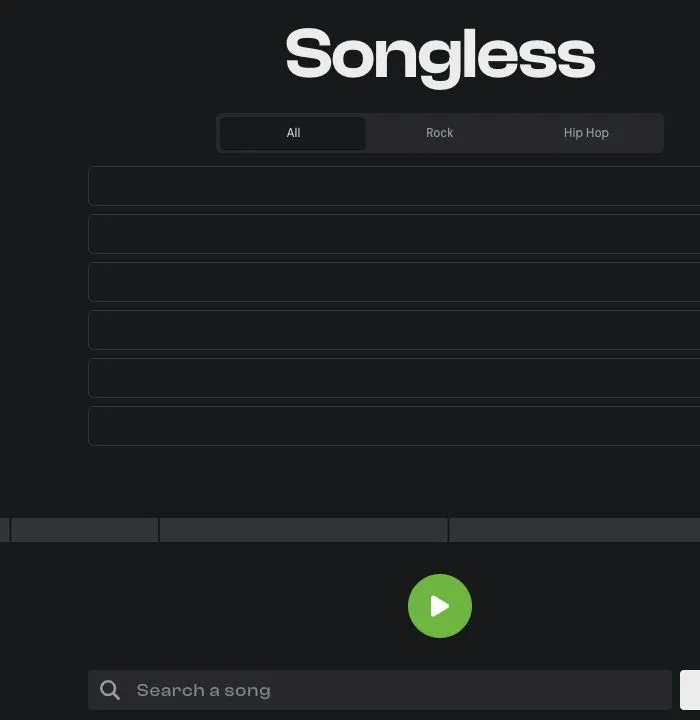 Start with SonglessA 0.1-second opening fragment grows after each miss, putting production, instrumentation, and vocal memory under unusually tight pressure.
Quick answer
Start with Songless for the most concentrated listening test, choose Crosstune when you want letters and neighboring clues to support recognition, or use Spotle when artist attributes matter more than audio.
A 0.1-second opening fragment grows only after misses, making tiny audio details useful.
Best reasoning supportCrosstuneShort clips become crossword clues and crossing letters can rescue an uncertain title.
Best artist deductionSpotleSubmitted artists return structured era, genre, lineup and country attributes.
The definition
Recognition can begin with sound, pitch, letters, artist attributes or video imagery. These formats reward different memories even when they point toward songs and performers.
Progressive fragments test whether production, instrumentation or vocals identify a song.
Crossing letters and artist attributes turn partial knowledge into structured deduction.
Frequency sliders and music-video stills ask for memories that do not begin with a title field.
Choose a route
Pick between the opening instant of a song, a crossword of clips, artist metadata, remembered tones, a familiar progressive intro or music-video imagery.
Start from a fraction of a second and unlock more audio only after misses.
I want crossing lettersCrosstuneUse neighboring answers to support song and artist recognition from short clips.
I know artist attributesSpotleCompare era, lineup, genre, country and other fields after each artist guess.
I remember pitchSoundRebuild five tones with a frequency slider rather than identifying a recording.
I want the familiar baselineHeardleUse progressive song fragments in the established daily music-guessing format.
I remember music videosMusicVidleInfer a song from six still frames without beginning from an audio clip.
The curated set
The set separates listening, memory, crossword rescue, artist comparison and video imagery so that one Heardle-style interaction does not stand in for every music game.
Start here
A 0.1-second opening fragment grows after each miss, putting production, instrumentation, and vocal memory under unusually tight pressure.
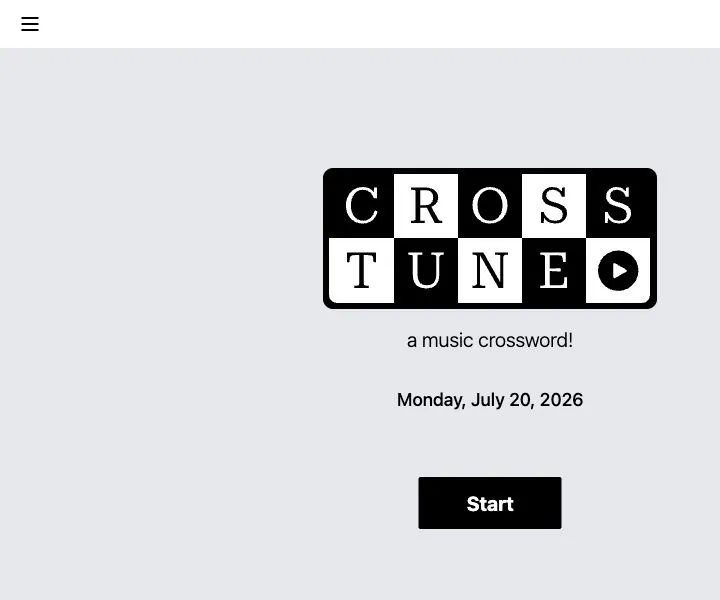
Clips · crossword
Short music clips become crossword clues, so partial titles and crossing letters can rescue a recording that is not immediately recognized.
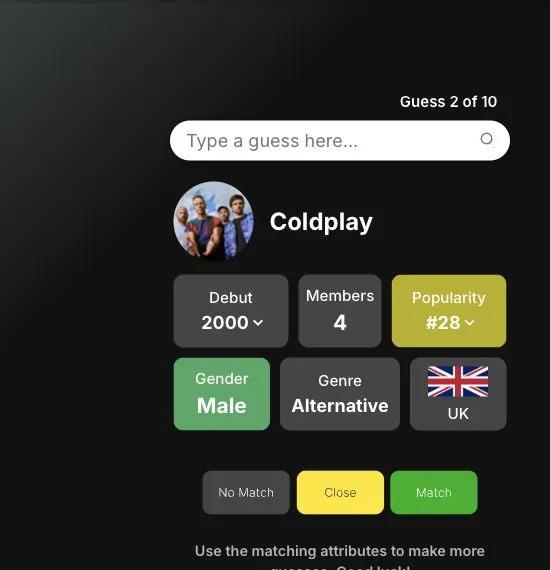
Artists · attributes
Artist guesses return era, lineup, genre, country, and other attributes, turning music knowledge into structured comparison rather than clip recognition.
Tone memory · slider
Five remembered tones are recreated with a frequency slider, shifting the challenge from naming a song to matching pitch by ear.
Progressive clips
Its progressive music-guessing format provides the familiar audio baseline against which the collection's more specialized interactions can be understood.
Video stills · song
Six music-video stills reveal a song through visual memory, providing a recognition route that does not begin with an audio clip.
At a glance
The games differ in what is presented first, what the player submits and which kind of musical memory can recover an uncertain answer.
| Game | Opening clue | Main action | Recognition target | Reasoning support |
|---|---|---|---|---|
| Songless | 0.1-second song fragment | Search, submit or skip | One song | More audio after misses |
| Crosstune | Short music clips | Fill crossword cells | Songs and artists | Crossing letters |
| Spotle | Artist comparison board | Submit artists | Mystery artist | Returned attributes |
| Sound | Remembered tones | Adjust frequency slider | Five pitches | Side-by-side tone matching |
| Heardle | Progressive intro | Guess or unlock audio | One song | Longer fragments |
| MusicVidle | Music-video stills | Identify the song | One song | Additional images |
How to choose
It isolates the opening instant and keeps the daily task focused on one recording rather than a larger board.
Crossing letters provide a second route when an individual audio clip is familiar but not immediately nameable.
Pick it when eras, genres and lineups are stronger memories than exact song introductions.
It removes song naming entirely and asks whether a heard tone can be reconstructed with a frequency control.
Editorial boundary
A music theme is not enough. Every selection makes sound, artist knowledge or music-video memory determine the result rather than decorate a generic puzzle.
Generic word or trivia games are excluded when music does not determine the central evidence or result.
The set uses Heardle as a baseline but favors additional entries that change the reasoning, target or sensory input.
A remembered music game is deferred when its official destination or current browser availability cannot be confirmed.
Selection method
Questions, answered
Songless is the strongest pure listening start, while Crosstune is better when you want letters to support uncertain clips.
Spotle uses artist attributes, Sound uses tone reconstruction, and MusicVidle begins with video stills.
Songless shares progressive song recognition but begins with an especially small 0.1-second fragment.
Crosstune turns short audio clips into crossword clues so crossing letters can help identify songs and artists.
Sound asks players to recreate five remembered tones with a frequency slider instead of naming a song.