Help a group, caller or audience choose a low-friction browser game with a visible guess and a reveal everyone can follow.
Games Built for a Reaction
Quick daily browser games where everyone can guess, argue or compare before the reveal.
These games work on a shared screen, in a call or with someone watching because another person can form an answer before the player commits. The reveal then turns that private guess into a score, comparison or disagreement that is readable in a moment.
Independently selected · Reviewed July 28, 2026
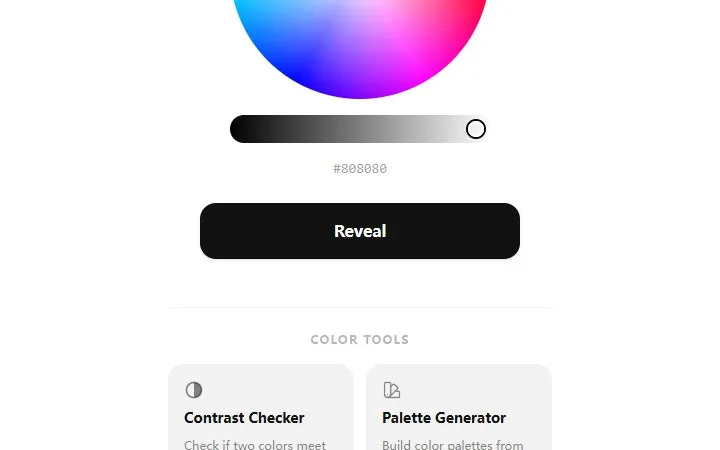 Start with ColorGuesserEveryone can picture the named color before the wheel moves, then compare that private mental swatch with the measured target and proximity score.
Comparison method
What this guide separates.
The page compares observable prompt and reveal mechanics, not audience size, popularity or unsupported claims about how groups will react.
Player input
Visible reveal
Discussion style
Evidence checked August 9, 2026
01
Quick answer
Three useful starting points.
Start with ColorGuesser when the group needs the clearest shared prompt. Choose Scrandle for an instant vote, or TimeGuessr when the point is a longer debate rather than a rapid reveal.
Easiest first pickColorGuesser
One written color and one wheel let every watcher make the same decision immediately.
Fastest group voteScrandleTwo food photos create an obvious choice before the crowd verdict appears.
Best for a debateTimeGuessrPlace and year theories give the group more evidence to discuss before committing.
02
The definition
What makes a game work with people watching?
It is not enough for a game to be short. A spectator needs a prompt they can understand, time to form a guess, and a reveal that makes the difference between guesses visible.
Shared prompt
Everyone sees the same color, photograph, dish or product before the active player answers.
Legible decision
A wheel, slider, choice, price, country or map gives the group a clear thing to compare.
Visible reveal
The result exposes distance, preference, direction or location instead of ending with a private score.
03
Choose a route
Choose the reaction you want.
The six games create different social moments. Pick the prompt that suits whether the group wants a quick vote, a confidence gap, a price argument or a slower theory-building round.
I want the easiest shared promptColorGuesser
A named color gives every watcher an immediate private answer before the score.
I want a memory comparisonDialedRebuilding one vanished color makes small differences in recall visible.
I want an instant group voteScrandleTwo food photos make the choice readable without explaining a scoring system.
I want a price argumentCostcodleThe product is visible and every person can call a number before higher-or-lower feedback.
I want a food-country debateFoodguessrIngredients and presentation support competing country guesses before the reveal.
I want a longer investigationTimeGuessrOne photograph can support separate theories about both location and year.
04
The curated set
Six games, six different jobs.
Each entry earns its place through a distinct prompt, input and reveal. The order is editorial, not a popularity chart.
Start here
ColorGuesser
Everyone can picture the named color before the wheel moves, then compare that private mental swatch with the measured target and proximity score.
- Best for
- A low-friction first game where every watcher can make the same private color choice.
- Watch out
- Color names are subjective, so the result measures closeness rather than one obvious right answer.
Color memory
Dialed
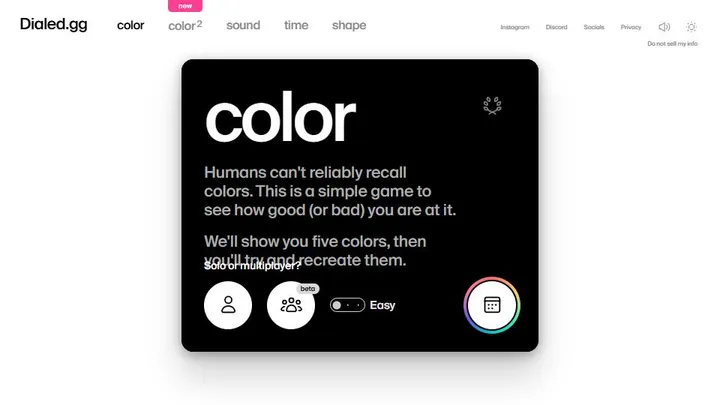
A target color disappears before the player rebuilds it with hue, saturation and brightness sliders, creating a side-by-side reveal that exposes confidence and memory at once.
- Best for
- Comparing how differently people remember the same briefly shown color.
- Watch out
- Three sliders create a little more input friction than ColorGuesser's direct wheel.
Food · crowd vote
Scrandle
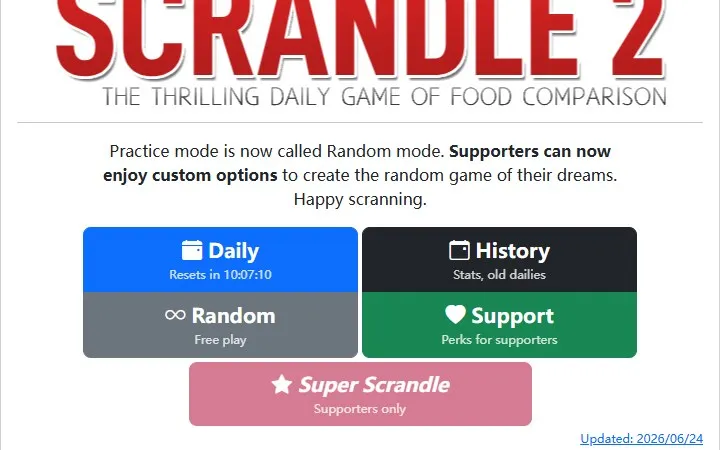
Two food photographs invite an immediate room-wide vote, while the public verdict gives the player a clean reveal to celebrate or dispute.
- Best for
- A fast group vote where taste and confidence matter more than specialist knowledge.
- Watch out
- The reveal reflects public preference, not an objective judgment about which food is better.
Price guessing
Costcodle
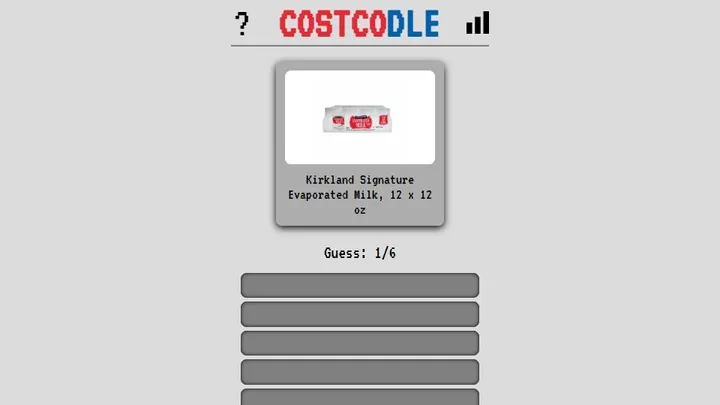
A familiar warehouse item makes price guesses easy to call out, and every higher-or-lower response shows which side of the real price the room landed on.
- Best for
- A short numerical argument built around a product everyone can inspect.
- Watch out
- Familiarity with US retail prices can be more useful than general trivia knowledge.
Food · geography
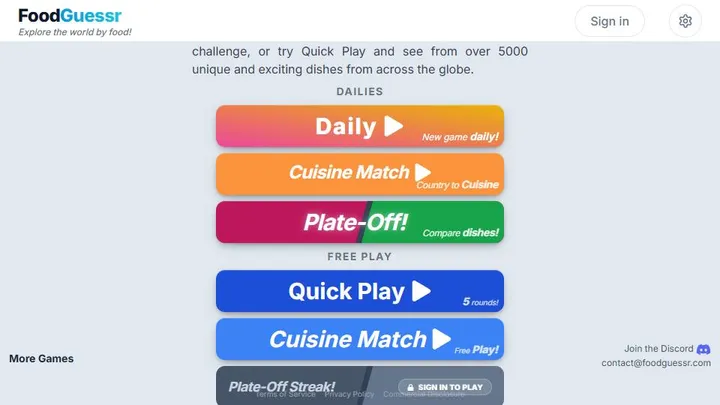
Foodguessr
A dish and its visible clues give everyone evidence to read before a country is chosen, so the geographic reveal naturally starts a comparison of competing theories.
- Best for
- Groups that enjoy identifying a place through ingredients, presentation and cultural clues.
- Watch out
- Some dishes cross borders, so a confident visual association can still point to the wrong country.
History · geography
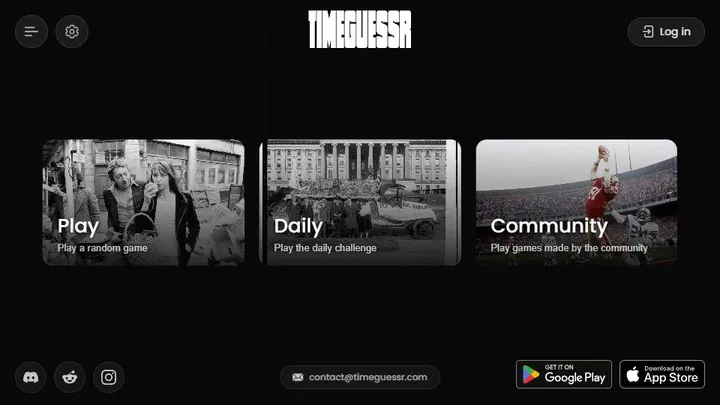
TimeGuessr
A historic photograph supports competing theories about both place and year, then turns those theories into a result that makes each assumption visible.
- Best for
- A longer discussion where people want to inspect architecture, clothing and context.
- Watch out
- It asks for two judgments and more observation, so it is less immediate than the other five.
05
At a glance
Compare the six games at a glance.
These dimensions show what the group actually does before the reveal and what becomes visible when the answer lands.
| Game | Prompt | Input | Reveal | Group rhythm |
|---|---|---|---|---|
| ColorGuesser | Written color name | Color wheel | Target distance and score | Immediate shared choice |
| Dialed | Briefly shown color | HSB sliders | Rebuilt color beside target | Short memory comparison |
| Scrandle | Two food photos | Pick one item | Public preference | Instant room vote |
| Costcodle | Warehouse product | Price guess | Higher, lower and distance | Quick numerical argument |
| Foodguessr | Dish and visual clues | Country guess | Country reveal | Evidence-led debate |
| TimeGuessr | Historic photograph | Map and year | Place and time result | Longer group investigation |
06
How to choose
Choose the moment you want to create.
Open ColorGuesser first
It has the clearest prompt, the least explanation and a result every watcher can compare with a private answer.
Use Scrandle for a quick vote
Two images create an immediate split in the room, and the public verdict arrives without a long setup.
Choose Dialed for confidence gaps
The side-by-side color reveal is useful when the fun comes from seeing how memory drifted.
Save TimeGuessr for discussion
Location and year clues reward a group that wants to inspect evidence and argue before submitting.
Editorial boundary
What we left out.
A short browser game is not enough. This page stays useful by excluding games that give spectators no meaningful guess before the reveal.
Reflex and arcade games
This set is about anticipation and reveal, not measuring reaction time or controlling fast action.
Spectator-blind puzzles
A short game is excluded when only the active player can understand the prompt or meaningfully form an answer.
Heavy setup
Games that require an install, account, payment or long tutorial before the first useful moment do not fit this collection.
Unclear official destinations
A game is deferred when its current operator, browser availability or official route cannot be verified.
Selection method
- A viewer can form an answer or judgment before the active player reaches the reveal.
- The reveal clearly contrasts the guess with an answer, measured result or crowd verdict.
- Core play opens in a browser without a required payment, account gate or long tutorial.
- Every selection has a current published Daily Game Index page, a verified official destination and a sourced image.
07
Questions, answered
Browser games for groups FAQ.
What are good browser games to play with friends?
ColorGuesser is the easiest starting point here, Scrandle works for a fast vote, and TimeGuessr suits a group that wants a longer geography and history discussion.
What makes a daily game good for a group reaction?
The prompt should be understandable before anyone answers, spectators should be able to form their own guess, and the reveal should make different choices easy to compare.
Are these games free to play?
The six selected games currently open their core browser play without a required upfront payment. Optional modes or features can still vary by game.
Do these games work in a call or on a shared screen?
They are selected because another person can follow the visible prompt and make a guess before the reveal. They are not presented as built-in multiplayer or streaming products.
Which game is fastest to understand?
Start with ColorGuesser for one named color and one wheel, or Scrandle when the group would rather choose between two photographs.