Dependent decisions
An early rung, ranking or tile choice changes the quality or availability of later moves.
Daily games, critically selected.
Help players find daily games where planning and sequencing matter more than a single isolated guess.
Six games where reaching the answer is only part of the challenge; the sequence of decisions determines whether the solve stays efficient.
A good route puzzle makes an early choice echo through everything that follows. These selections ask you to manage a ladder, a stack, a ranking, a globe, or an incomplete set of answers rather than guess once and move on.
Independently selected · Reviewed July 28, 2026
 Start with PoopleEvery valid rung narrows or expands the next move, and the fixed destination rewards a shorter, cleaner ladder rather than merely arriving.
Quick answer
Start with Poople for the clearest move-by-move route, choose Factle when you want structured repair feedback, or open Stackdown when board state should change after every valid word.
Every one-letter change reshapes the available path toward one fixed destination.
Best feedback loopFactleEach submitted ranking shows which positions need to be preserved or repaired.
Best changing boardStackdownRemoving exposed tiles reveals a new layer and changes the value of the next word.
The definition
Strategy appears when the current move changes later options, evidence or efficiency. These games ask for a route rather than six unrelated attempts at one answer.
An early rung, ranking or tile choice changes the quality or availability of later moves.
The game exposes position, distance, board state or remaining gaps that can guide a revision.
The finish can be compared with a cleaner ladder, better order or more efficient sequence.
Choose a route
Pick between explicit move sequences, a board that reveals itself, ranking repair, spatial calibration, broad recall and visual decomposition.
Change one letter per rung and judge the final ladder by how directly it reaches the target.
I want a changing boardStackdownEvery selected word removes tiles and determines which letters become available next.
I want corrective feedbackFactleReorder five supplied answers from positional feedback across a limited set of attempts.
I want spatial calibrationMapTapRead a short clue, rotate the globe and improve the placement logic across the round.
I want broad recallDaily TensUse obvious ranked entries as anchors while filling the uncertain parts of a top-ten set.
I want a visual routeGlyphSeparate overlapping letter shapes until the hidden word becomes a plausible commitment.
The curated set
Each game makes an early decision change what can be learned or attempted next. The order moves from explicit routes to broader planning problems.

Start here
Every valid rung narrows or expands the next move, and the fixed destination rewards a shorter, cleaner ladder rather than merely arriving.
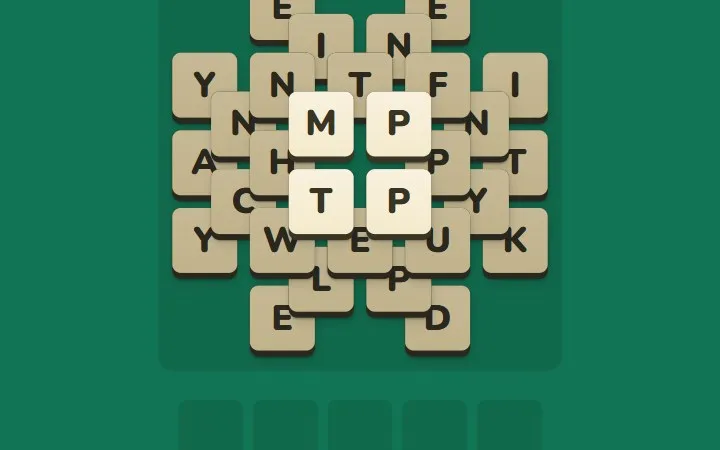
Layered board
Selecting one exposed word reveals a different layer of tiles, so immediate vocabulary and longer route planning stay inseparable.
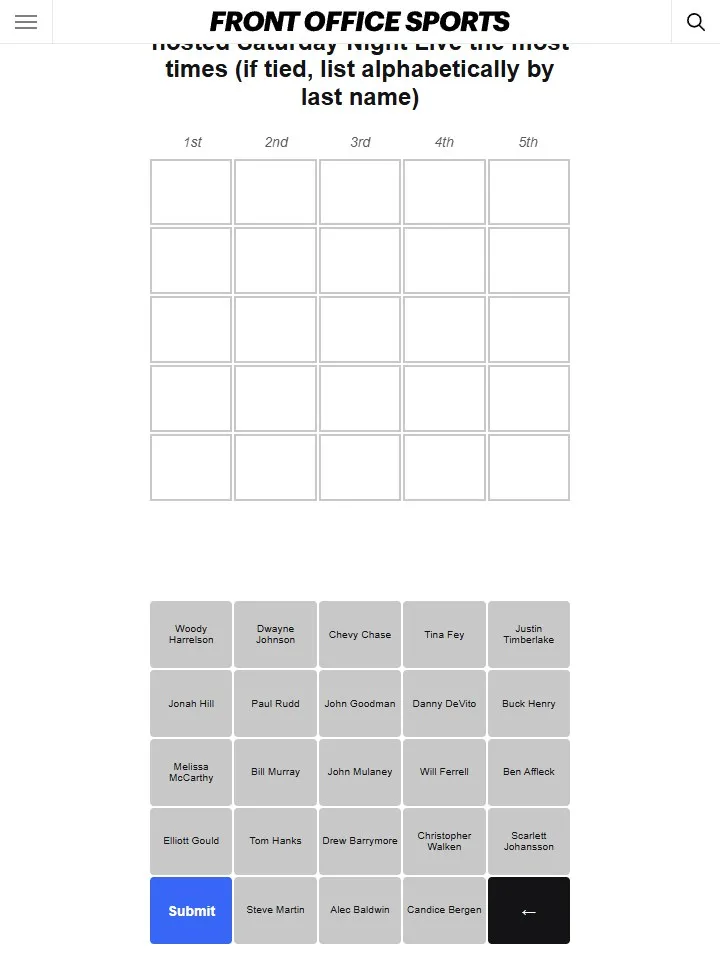
Ranking repair
Each submitted ranking returns position feedback that must be used to repair the full order within the remaining attempts.

Spatial commitment
Each globe placement is a commitment made from a short clue, turning orientation and calibration into a sequence of spatial judgments.
Ranked recall
Broad recall has to be managed across a ranked set, with obvious leaders providing anchors for the harder remaining entries.

Visual decomposition
Separating the layered letter shapes creates a visual route into the final word instead of presenting a conventional clue-answer exchange.
At a glance
The useful difference is not nominal difficulty, but what each decision changes and what evidence becomes available for the next move.
| Game | Core decision | What changes next | Main feedback | Route pressure |
|---|---|---|---|---|
| Poople | Change one letter | Legal next rungs | Valid ladder state | Reach a fixed word efficiently |
| Stackdown | Select exposed tiles | Next board layer | Removed and revealed tiles | Clear the stack in sequence |
| Factle | Rank five answers | Revised full order | Position feedback | Repair within remaining attempts |
| MapTap | Place one globe tap | Spatial calibration | Distance result | Commit from a short clue |
| Daily Tens | Fill ranked entries | Remaining gaps | Accepted list positions | Balance anchors and uncertain recall |
| Glyph | Separate letter strokes | Candidate word shapes | Visual fit | Convert one mark into a word |
How to choose
Its legal one-letter moves make cause and effect visible, so it is the clearest introduction to route quality.
Choose it when you want every attempt to return structured information about a complete ordering.
It rewards thinking beyond the current valid word because each removal exposes the next layer.
Its strategy comes from managing confidence across a set rather than optimizing one local move.
Editorial boundary
A difficult answer is not enough. These games are included because the order, repair process or sequence of commitments changes the solve.
A game is left out when one attempt does not change the evidence, options or value of the next attempt.
Obscure answers alone do not create strategy when the solve offers no route, ordering or repair process.
The collection favors bounded daily routes with a clear stopping point rather than open-ended management systems.
Selection method
Questions, answered
Poople is the clearest starting point because every valid one-letter move changes the route toward a fixed destination.
Factle returns position feedback for a five-item ranking, making each revision directly connected to the previous attempt.
Stackdown removes selected exposed tiles and reveals a different layer, so each valid word changes the next board state.
No. MapTap uses globe placement, Factle uses ranking, and Daily Tens uses ranked category recall alongside the word-led selections.
They are bounded daily games, but completion time varies by route, familiarity and how much a player chooses to optimize.