Index guide
Scroople
Scroople is a solo daily word-board challenge with a changing premium-square layout, a fixed thirty-tile bag, two blanks, and eight turns to build a score.
The official game is loaded above. If it does not respond, open the publisher’s site in a new tab.
Player reviews
What did players make of it?
Loading player ratings…
Loading reviews…
Verified round model
How a round of Scroople works.
Objective, input, feedback and stopping condition checked 10 August 2026.
Objective
Build the highest-scoring connected word board possible within eight turns by spending the shared daily pool of thirty tiles, including two blanks.
Your move
Place letter tiles onto the board, adjust the rack with Shuffle, and use Submit to commit a valid placement or Give Up to end the run.
What changes
The board marks letter and word bonus cells, while the interface updates the total score, tiles remaining, current turn, and the best score recorded that day.
Round end
The scoring run ends after the eighth submitted turn, when the thirty-tile pool is exhausted, or when the player chooses Give Up.
Why it stands out
Eight turns turn a familiar word board into a resource plan.
Scroople removes the opponent but keeps the opportunity cost of every tile. A placement scores now, changes the shape of every later crossing, and spends letters from a fixed thirty-tile pool. The changing bonus-square layout makes route planning and rack preservation more important than simply submitting the longest available word.
Best for
- Word-board players who want solo score optimization without defending openings from an opponent.
- Planners who enjoy saving flexible letters and building crossings over several turns.
Think twice if
- Players who prefer a single correct solution instead of an open-ended daily score.
- Solvers who do not want vocabulary strength and tile values to affect the result.
The daily puzzle is a fixed resource problem
Every player receives a thirty-tile pool with two blanks and eight turns. The bonus-square layout also changes each day. Those shared inputs make the final score comparable, but they do not imply one intended solution: two players can spend the same letters on different boards and finish with different totals.
The important constraint is not only whether a word fits now. Each placement also creates—or blocks—crossings for the turns that remain. Because there is no opponent, an open premium square is not a gift to somebody else. It is an option you may be able to exploit later.
Score the board, not just the current rack
A long word can be inefficient if it consumes flexible letters without reaching a useful multiplier. Before submitting, compare three values: the immediate tile score, any cross-words created by the placement, and the shape left for the next rack. A shorter move can be stronger when it anchors a future word through a double- or triple-word cell.
Blanks increase placement freedom but contribute little direct letter value. Use them to unlock a premium lane, preserve a scarce real tile, or complete a crossing that would otherwise be impossible. Spending a blank merely to extend an ordinary low-value word gives up most of that flexibility.
Eight turns reward sequencing
The turn cap makes move order part of the score. Early placements should create several attachment points rather than a narrow arm that can only grow in one direction. Middle turns are the time to combine crossings and multipliers. Near the end, unused flexibility loses value, so converting the remaining tiles into any valid score becomes more important than preserving an elegant board.
The interface exposes score, tiles remaining, turn count, the current daily best, Shuffle, Submit, and Give Up. “Best Today” is a comparison inside the game, not evidence of how many people played.
A practical eight-turn plan
- Inspect the premium layout before placing the opening word.
- Keep common connectors and at least one flexible vowel when the rack allows.
- Prefer openings that expose two or more future crossing directions.
- Count cross-word points and multipliers before choosing the longest-looking candidate.
- Reserve blanks for access problems, not routine spelling convenience.
- In the final turns, favor guaranteed valid placements over resources that will otherwise remain unused.
ClickWord is the closest score-building comparison, but it removes words after they are claimed and uses a larger sixty-tile supply. Word Grid moves in the other direction: every cell must satisfy crossing categories, so rarity and constraint fit replace Scroople’s free-form placement choices.
How to play
- Draw from the daily pool of thirty letter tiles, including two blanks.
- Place valid crossing words on the board to use letter and word bonuses.
- Finish eight turns with the highest total you can make from that day’s pool.
Game passport
A quick read before you play.
Play
- Mechanics
- Word board, Tile placement, Score optimization
- Input
- Board tile placement with Shuffle, Submit, and Give Up controls
- Language load
- High
Access
- Price
- Free to play
- Account
- Not required
Return
- Cadence
- Daily
- Features
- Sharing: Yes
Index status
- Editorial depth
- Guide
- Play time
- A few minutes
- Difficulty
- Demanding
Around the web
A narrow but specific strategy signal
One returning player in Scroople’s launch discussion revised their first impression upward after recognizing that each placement invests in their own future crossing opportunities.
What drew players back
- The player found more strategy on a repeat session than was apparent on the first play.
- They specifically distinguished solo planning from competitive Scrabble: an opening helps the same player later rather than exposing a bonus to an opponent.
What got in the way
- The strategic layer was not obvious on the first session, suggesting that the opening board can initially look shallower than it is.
One substantive player follow-up was paraphrased from a July 2026 Reddit launch thread; generic congratulations were excluded as non-informative. A single substantive comment cannot establish broad satisfaction, retention, score balance, or the experience after many daily boards.
Related games
Keep the same kind of attention.
good next step
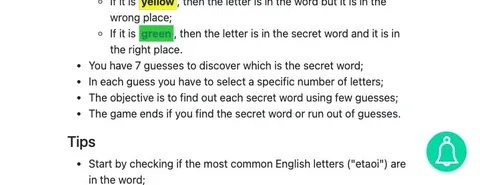
Secret Words
Secret Words stays in Word & Logic, using words as the way in.
good next step
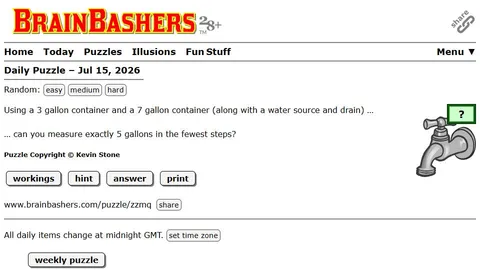
BrainBashers Daily Puzzle
BrainBashers Daily Puzzle is another Word & Logic pick, built around numbers and logic.
good next step
Infinite Puzzles
Infinite Puzzles is another Word & Logic pick, built around numbers and logic.
good next step
Zaggle
Zaggle stays in Word & Logic but shifts the challenge toward word tracing.
good next step
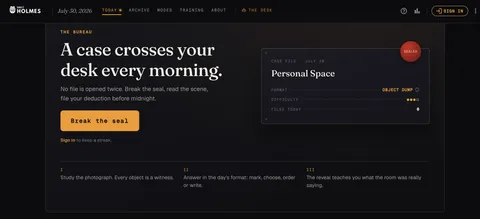
Daily Holmes
Daily Holmes stays in Word & Logic but shifts the challenge toward visual observation.
good next step
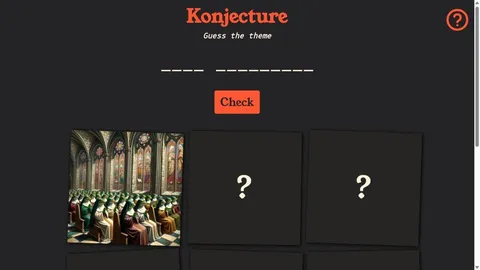
Konjecture
Konjecture stays in Word & Logic but shifts the challenge toward word guessing.
Before you play
Questions before you play.
- How many tiles and turns does Scroople use?
- Each daily run uses a fixed pool of thirty tiles, including two blanks, and allows up to eight scoring turns.
- Does the Scroople board stay the same every day?
- No. The letter and word bonus-square layout changes every twenty-four hours along with the shared daily tile pool.
- Is Scroople played against another person?
- No. It is a solo score challenge, so any crossing opportunity you create remains available for one of your own later turns.
- Can Scroople scores be compared with friends?
- Yes. The creator describes a result-sharing action intended for comparing totals from the same daily setup.
Source ledger
The evidence behind this page.
The playable official page and first-person launch post establish the daily board, thirty-tile pool, two blanks, eight-turn limit, scoring goal, access model, reset behavior, and score sharing.
- Scroople official gameOfficial, Web, checked 10 August 2026
- Scroople creator launch postCreator profile, Creator, checked 10 August 2026