Index guide
Word to your Mother
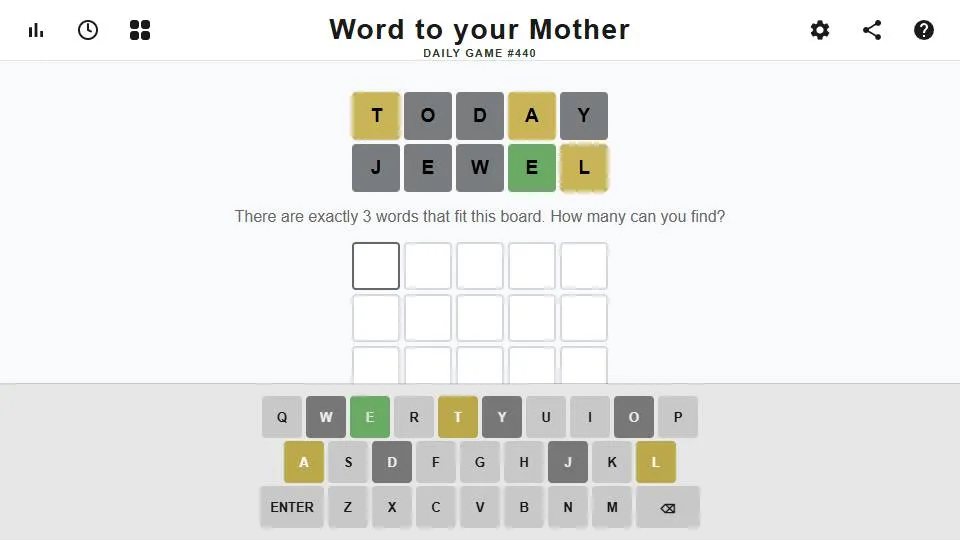
Find every word that matches one shared set of Wordle-style letter clues, rather than stopping after a single hidden answer.
Continue playing on the publisher's official site.
Player reviews
What did players make of it?
Loading player ratings…
Loading reviews…
Verified facts
What the evidence confirms.
Only sourced identity, play and access claims are included; unknown details stay omitted.
Play loop
Players must enter all target words matching one shared Wordle-style clue pattern; bonus words are optional.
Source: Word to your Mother — game rules and aboutPlayer input
The game accepts typed word entries and provides an on-screen letter keyboard.
Source: Word to your Mother — game rules and aboutAccess
Word to your Mother's core web game can be opened without an upfront payment.
Source: Word to your MotherAccount
Word to your Mother does not require an account before core play.
Source: Word to your MotherVerified round model
How a round of Word to your Mother works.
Objective, input, feedback and stopping condition checked 10 August 2026.
Objective
Find all target words that satisfy the same positional, present-letter and excluded-letter conditions shown by the opening clue row.
Your move
Type a candidate word with the physical or on-screen keyboard, then submit it for validation against the board's shared conditions.
What changes
Normal Mode reformats accepted target words to describe the answers still missing; Hard Mode keeps prior entries in uniform colors and removes those extra clues.
Round end
The round is complete when every target word has been found; optional starred bonus words can be discovered without being required for the win.
Why it stands out
One clue pattern becomes a search for the whole answer set.
Most Wordle relatives hide one answer. Word to your Mother turns the colored row into a definition for an entire answer set, so the useful question is not “what is the word?” but “which valid words are still compatible?” Normal Mode then changes the evidence after each find, while Hard Mode removes that help and makes memory and systematic search more important.
Best for
- Word-game players who enjoy enumerating a complete possibility set instead of finding one answer
- Solvers who want the same core puzzle in assisted Normal Mode and stricter Hard Mode
Think twice if
- Players who prefer a fixed guess limit or a single obvious target word
- Solvers who dislike obscure but valid vocabulary appearing as optional bonus discoveries
One pattern, several answers
The opening row looks familiar, but it describes a set rather than one secret word. A fixed-position letter must appear in that position in every target. A present letter belongs in every target but not where the clue placed it. An excluded letter belongs in none of them. The round ends only after the whole target set has been found.
That change makes possibility management more important than information hunting. In Wordle, a broad probe can be useful because it tests several letters at once. Here, every submitted target has to obey the conditions already on the board, so the useful move is one that both qualifies and helps organize what could remain.
Normal Mode keeps rewriting the problem
After a target is accepted in Normal Mode, its colors are reformatted around the missing answers. A letter can show that all remaining targets share one position, that at least one remaining target uses it elsewhere, or that the letter no longer appears in the unsolved set. The board therefore becomes more specific after each success.
Read those updated rows as new constraints, not as a score for the word just entered. Before trying another candidate, combine the opening row with every condition revealed by accepted targets. This is the main shortcut the interface gives you.
Hard Mode removes the accumulating hints
Hard Mode leaves earlier entries uniformly colored instead of converting them into clues for the remaining targets. The objective does not change, but the external memory aid does: you must remember which compatible answers you have already exhausted and search the original possibility space more systematically.
Start in Normal Mode if the multi-answer rule is new. Hard Mode is the better second step once you can translate one Wordle-style row into a list of candidates without relying on the board to summarize the remaining set.
Bonus words and return modes
The game recognizes some less-common words from an extended list. They appear as starred bonus words, can contribute letter clues in Normal Mode and are not required for completion. This avoids punishing a valid obscure find while keeping the target list finite.
The daily board is only one return path. Unlimited random games are available for practice, and a separate decaleptical game changes every ten minutes. Statistics track completion times for Normal and Hard play, while the completion panel can copy a result to the clipboard.
A practical first-round strategy
- Translate the opening colors into a written set of fixed, required and excluded letters.
- Prefer a common qualifying word before searching the extended vocabulary for bonus possibilities.
- After every Normal Mode success, reread its colors from the perspective of the answers still missing.
- When several candidates differ by one position, test the one that separates the largest number of remaining letter patterns.
- Switch to Hard Mode only when remembering previous candidates is part of the challenge you want.
How to play
- Read the starting row as a shared set of Wordle-style conditions that every target answer must satisfy.
- Enter a valid word that matches every fixed, present and excluded-letter condition shown on the board.
- In Normal Mode, use the reformatted colors on accepted target words to narrow the answers that remain.
- Find every target word to finish; starred bonus words are optional and do not block a win.
Game passport
A quick read before you play.
Play
- Mechanics
- Multi-answer deduction, Constraint satisfaction, Word guessing
- Input
- Physical keyboard or on-screen letter keys
- Language load
- High
Access
- Price
- Free to play
- Account
- Not required
- Mobile friendly
- Yes
Return
- Cadence
- Daily
- Features
- Stats: Yes · Sharing: Yes
Index status
- Editorial depth
- Guide
- Difficulty
- Demanding
Related games
Keep the same kind of attention.

same mechanic
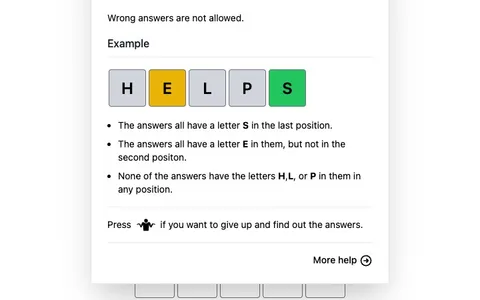
WordAll
The official W2YM rules credit WordAll as the source of the core multi-answer idea, making it the closest comparison for players who want another shared-clue word search.
more strategic
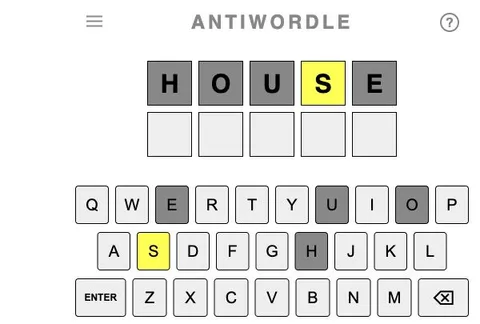
Antiwordle
Antiwordle also reverses the usual one-answer Wordle objective, but asks you to prolong the solve instead of enumerating every word compatible with one clue pattern.
same mechanic
Pixletters
Pixletters also centers on word guessing, but approaches the solve through word guessing.
same mechanic
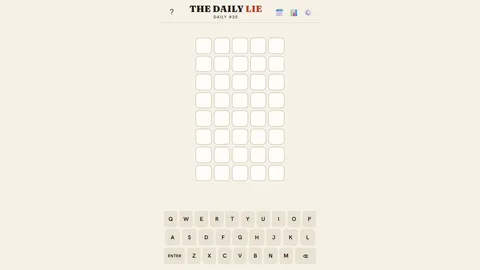
The Daily Lie
The Daily Lie also centers on word guessing, but approaches the solve through deduction.
same mechanic
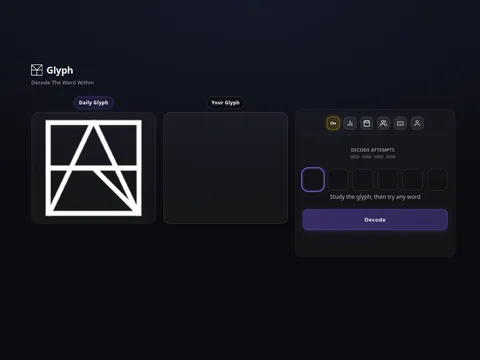
Glyph
Glyph also centers on word guessing, but approaches the solve through word guessing.
Before you play
Questions before you play.
- How is Word to your Mother different from Wordle?
- Wordle asks for one hidden word. This game gives one shared clue pattern and asks you to find every target word that satisfies it.
- What changes when Hard Mode is enabled?
- Hard Mode removes the additional letter clues normally generated from target words you have already entered, so earlier finds remain uniformly colored.
- Do bonus words count toward completing the puzzle?
- No. Bonus words come from an extended word list, receive a star in the result and remain optional; finding all target words completes the round.
- Is there anything to play after the daily puzzle?
- Yes. The official game also provides unlimited random boards and a separate decaleptical puzzle that refreshes every ten minutes.
Source ledger
The evidence behind this page.
The official rules and About panel support the shared-clue loop, modes, bonus-word behavior, return rhythms, creator credit, controls, statistics and sharing fields; difficulty and fit remain Index judgments.
- Word to your MotherOfficial, Web, checked 14 July 2026
- Word to your MotherOfficial, Web, checked 14 July 2026
- Word to your Mother — game rules and aboutOfficial, Web, checked 10 August 2026