 Equation-feedback route
Start here
Nerdle
Six attempts and positional colors are applied directly to a hidden equation.
Daily games, critically selected.
Daily Game Index Guide
Daily number and equation puzzles that preserve Wordle's short attempt loop or corrective feedback while replacing vocabulary with arithmetic, ranking and quantitative recall.
Start with Nerdle for equation-and-color deduction. Choose Numble to build toward one target with reusable results, or Sumplete to remove values until every row and column reaches its sum.
Equation-feedback routeStart here
Six attempts and positional colors are applied directly to a hidden equation.
01 / Choose
Choose positional equation clues, construction toward a known target, or quantitative ordering without formal equation syntax.
02 / Definition
The closest games do not merely contain numbers. They create a bounded hidden structure, accept repeated valid attempts and return feedback that changes the next calculation or ordering.
The answer is an equation, number construction or correct order that must be inferred.
Each submitted expression or ranking must obey the game's mathematical rules.
Position colors, target distance or ordered results guide the next move.
A daily board and attempt cap create a clear finish.
The completed solve can be discussed without requiring a long campaign.
03 / Context
Wordle's feedback loop works without vocabulary when the answer has ordered symbols, a target or a measurable relationship. Math alternatives shift the learning curve from dictionary recall to equation syntax and quantitative reasoning.
The editorial view
Digits and operators replace letters while keeping positional evidence.
Some games reveal the result and hide the equation; others hide the whole expression.
Ranked facts and row-column totals use quantities without requiring one hidden equation string.
04 / Core list
Each entry separates hidden equations, supplied targets, reusable intermediate results, and number logic that only borrows the daily format.
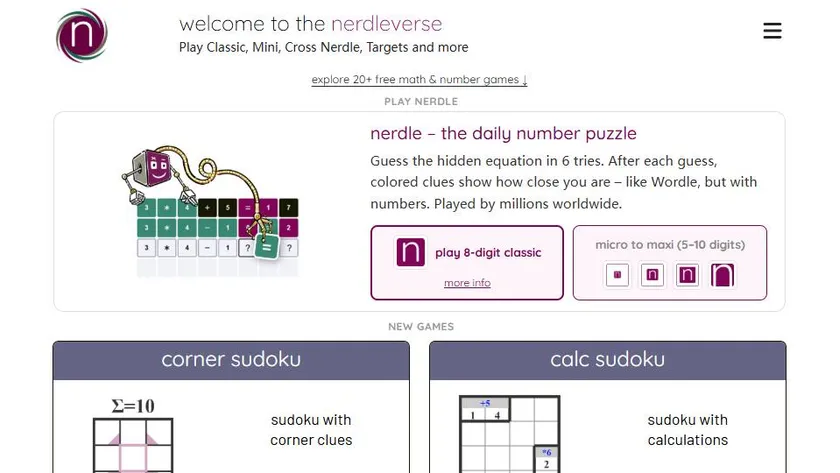
A direct translation of Wordle's six attempts and positional colors into a valid hidden equation.
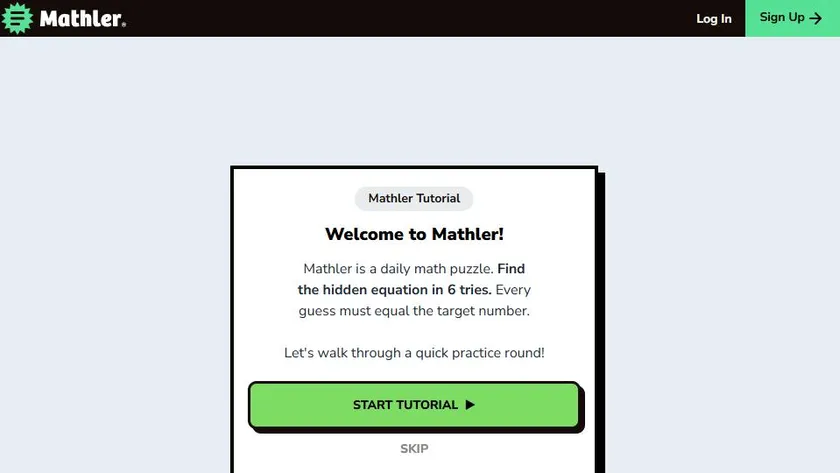
A clear target-number variation where the daily result is visible but the equation producing it remains hidden.
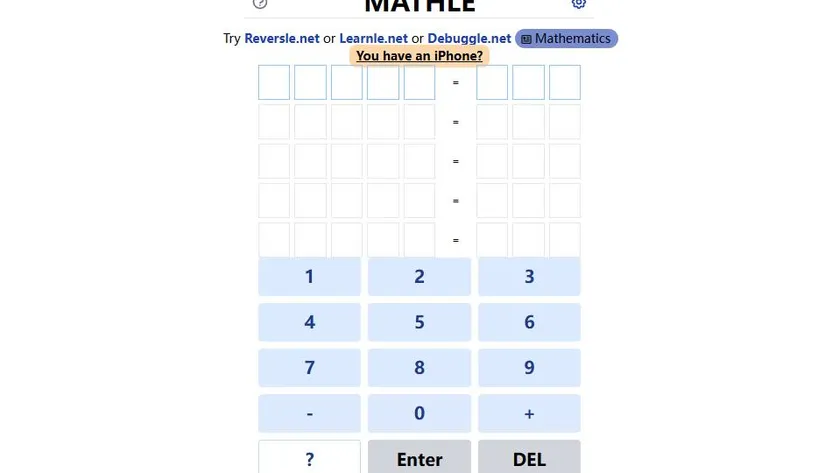
A smaller arithmetic route focused on discovering a valid addition or subtraction expression quickly.
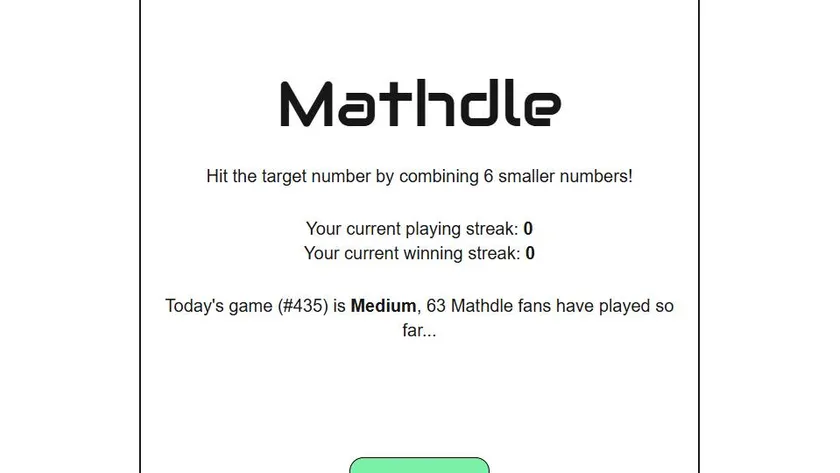
Supplied smaller numbers turn the problem into construction rather than positional symbol guessing.

A six-try number-and-operator board for readers who want a recognizable mathematical Wordle presentation.
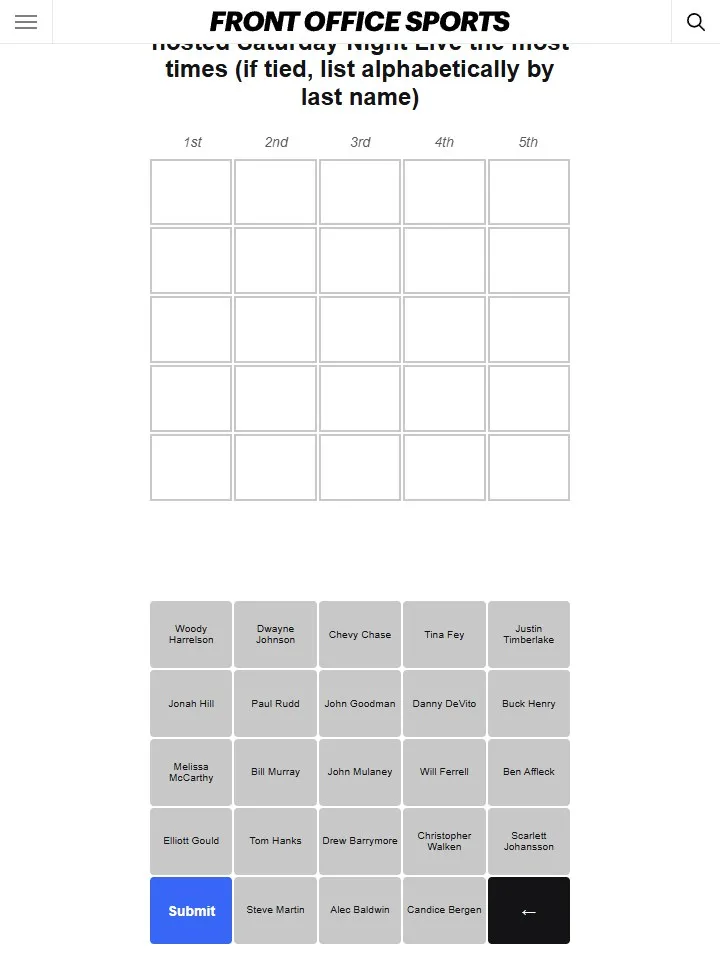
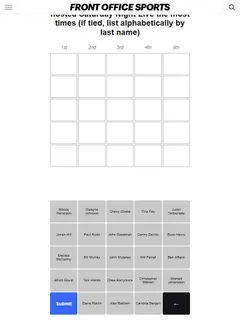
Quantitative trivia becomes deduction when five factual answers must be repaired into the correct order.
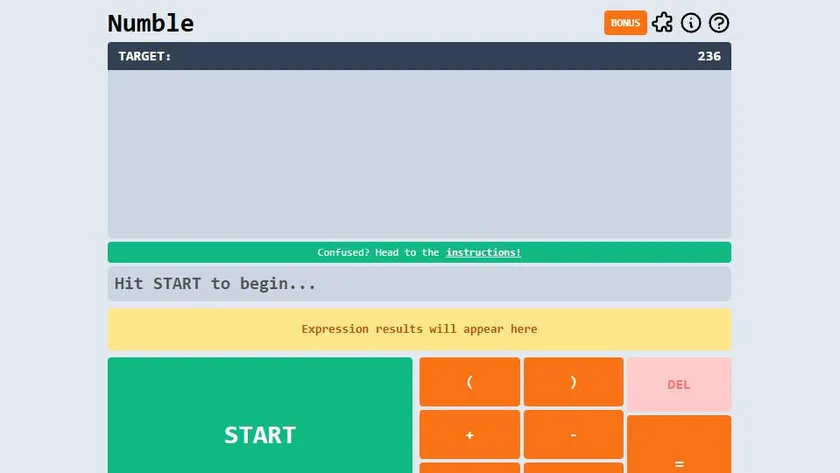
A target-number construction puzzle where saved intermediate results become the building blocks for later expressions.
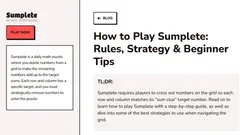
A simultaneous sum puzzle where deleting one value can repair a row while breaking the logic of its column.
05 / Go deeper
These paths distinguish symbol placement from arithmetic construction and quantitative deduction, where similar interfaces can hide very different work.
Equation feedback
These games are the closest mechanical translations of Wordle's ordered tile feedback.
Changed arithmetic
These routes keep one daily math target while changing the allowed operations or supplied material.
Quantitative logic
Ranking and row-column constraints preserve a bounded daily challenge for readers who prefer ordering or elimination to formal expression guessing.
06 / Compare
The table distinguishes hidden equations, target construction and quantitative knowledge before the shared Wordle-like surface becomes misleading.
| Game | Target | Input | Feedback | Cadence | Verification |
|---|---|---|---|---|---|
| Nerdle | Hidden equation | Digits and operators | Position colors | Daily with archive | Rules checked |
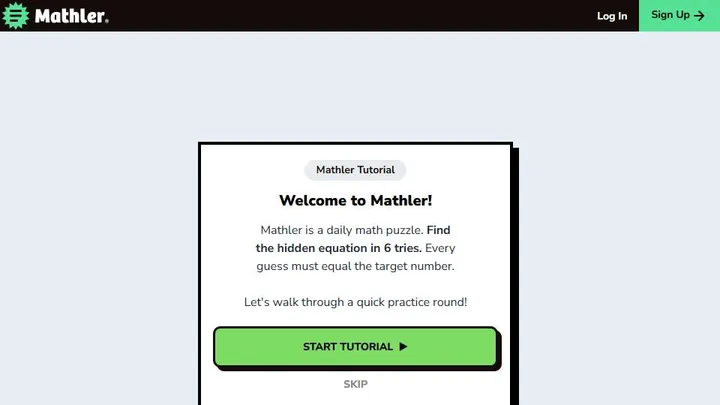
| Mathler | Target equation | Valid expression | Position feedback | Daily with archive | Rules checked |
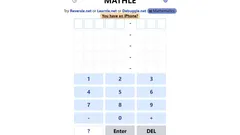
| Mathle | Simple equation | Addition or subtraction | Attempt feedback | Daily | Rules checked |
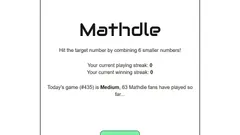
| Mathdle | Target number | Six supplied numbers | Target result | Daily | Rules checked |
| Numberle | Hidden expression | Digits and signs | Tile feedback | Daily | Rules checked |
| Factle | Ordered facts | Reorder five answers | Position colors | Daily | Hands-on check |
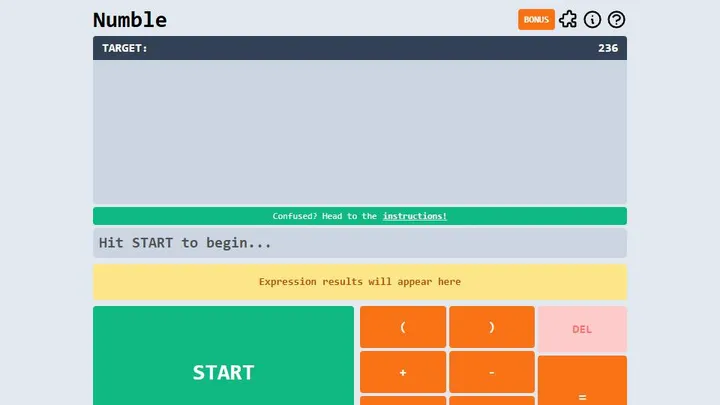
| Numble | Target number | Six numbers and operations | Saved intermediate results | Daily with archive | Rules checked |
| Sumplete | Row and column totals | Cross out or keep values | Sum constraints | Daily 5x5 and 7x7 | Rules checked |
07 / Decide
Decide whether you want to infer an equation, build a result from supplied numbers, or remove and order values under explicit constraints.
Nerdle, Mathler and Numberle are the clearest choices when ordered equation feedback is the main appeal.
Mathler hides one expression, while Mathdle and Numble supply smaller numbers used to reach the displayed result.
Mathle narrows the operation set; Factle removes equation entry and Sumplete replaces it with row-and-column elimination.
Numble lets one saved calculation feed the next, while each Sumplete decision simultaneously affects a row and a column.
08 / Standards
The comparison requires a bounded recurring challenge and records whether Wordle likeness comes from positional symbols, limited attempts, corrective feedback or only the daily result.
09 / Questions
Nerdle is the closest recommendation because it applies six attempts and positional color feedback directly to a hidden equation.
Nerdle hides the full equation, while Mathler shows the target value and asks you to find the expression that produces it.
Mathle narrows the task to a simple addition or subtraction expression in fewer than five tries.
Factle ranks five factual answers, while Sumplete asks you to eliminate visible values until every row and column meets its target.