Different objective
The player may avoid the answer, reach a destination or clear a board rather than identify one isolated word.
Daily games, critically selected.
Help regular word-game players find a meaningfully different interaction without relying on a list of superficial Wordle variants.
Six word games that change the route, board, objective, or visual evidence instead of repeating one isolated five-letter solve.
The useful question is not whether a game resembles Wordle, but what new decision it introduces. These selections invert the objective, connect several answers, layer letters into an image, expose a physical stack, or turn word changing into route planning.
Independently selected · Reviewed July 28, 2026
 Start with PoopleEvery move changes one letter on the way to a fixed destination, so route efficiency matters after the vocabulary problem has been solved.
Quick answer
Start with Poople for a visible word route, choose Antiwordle when you want the familiar tile language turned against its usual objective, or pick Thirdle for several connected answers on one board.
Every one-letter change advances a visible ladder toward a fixed destination.
Best inverted objectiveAntiwordlePreserve possibilities and delay the answer while obeying the feedback already revealed.
Best connected boardThirdleThree crossing words share letters and let progress in one answer unlock another.
The definition
The game must change the objective, board, route or source of evidence. A different answer theme is not enough when the player is still solving one word through the ordinary positional-feedback loop.
The player may avoid the answer, reach a destination or clear a board rather than identify one isolated word.
Crossings, ladders and layers make each word part of a larger connected state.
Pixels or overlapping strokes can replace a row of positional tiles as the information the player must interpret.
Choose a route
Decide whether you want to plan a route, invert the objective, connect answers, decode visual letters or change a layered board.
Change one letter at a time and compare the efficiency of routes to the fixed endpoint.
I want to avoid winningAntiwordleUse familiar feedback to preserve alternatives and postpone the hidden answer.
I want crossingsThirdleSolve three linked five-letter words that share constraints across the board.
I want pixel cluesPixlettersRead dot-matrix letter shapes before using vocabulary and positional evidence.
I want layered lettersGlyphSeparate overlapping strokes inside one geometric mark to recover the word.
I want a changing boardStackdownForm words from exposed tiles and reveal the next layer of the stack.
The curated set
Every selection changes the objective, route, board or evidence rather than relying on a new theme for the ordinary one-hidden-word loop.
Start here
Every move changes one letter on the way to a fixed destination, so route efficiency matters after the vocabulary problem has been solved.
Avoid the answer
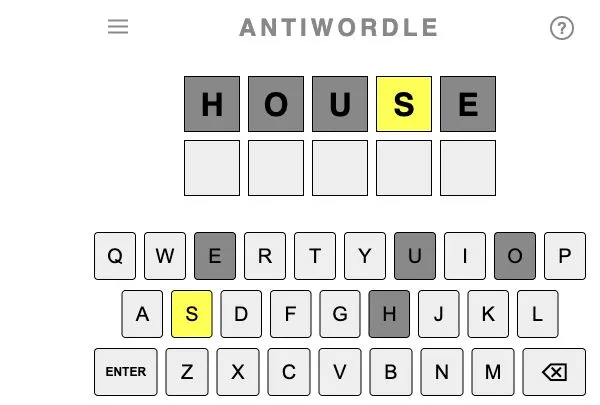
The objective is deliberately inverted as players preserve possibilities and obey accumulating constraints while trying not to reach the answer too quickly.
Solve crossings
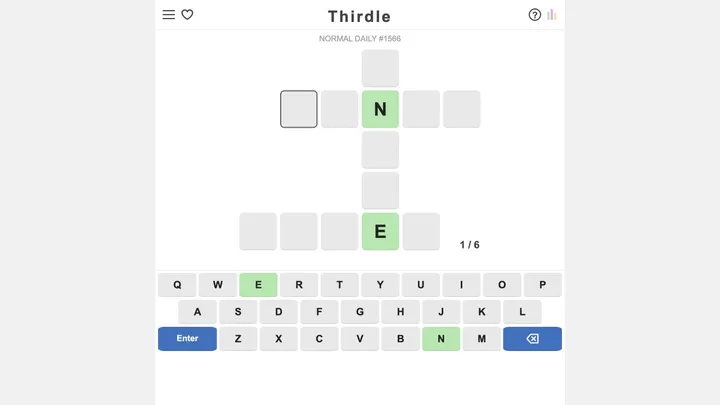
Three crossing five-letter words share constraints, allowing information from one row to unlock another instead of isolating each answer.
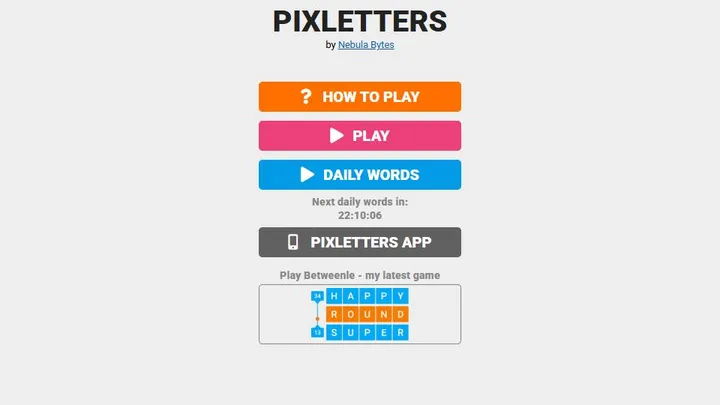
Read pixels
Dot-matrix shapes supply the evidence for each letter, making visual decoding as important as spelling and positional feedback.
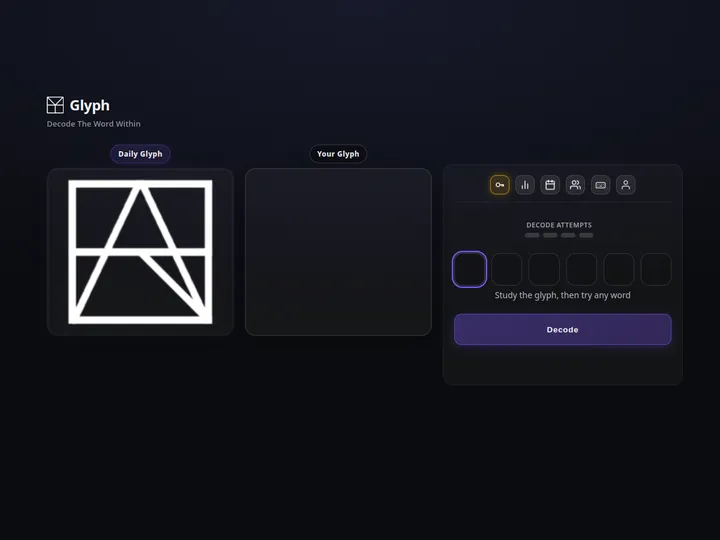
Separate strokes
Several letters are layered into one geometric mark, so the word begins as a problem of separating strokes before it becomes vocabulary.
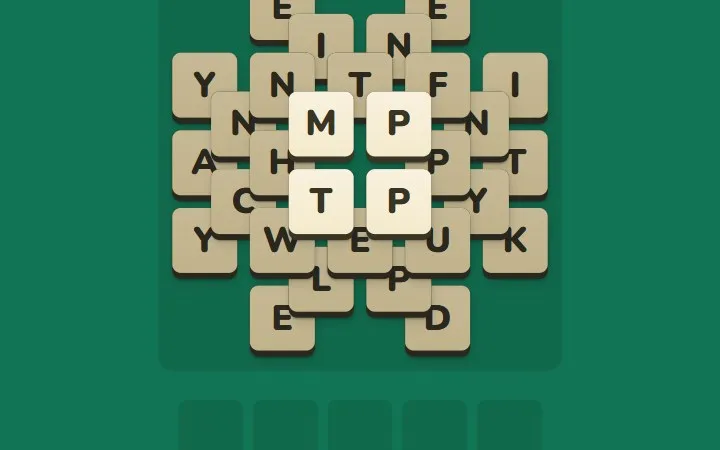
Clear a board
Five-letter words remove exposed tiles and reveal the next layer, binding every valid word to a longer board-clearing sequence.
At a glance
These games use words, but the objective, evidence and persistent state determine what the player is actually solving.
| Game | Objective | Board or evidence | Main input | Main constraint |
|---|---|---|---|---|
| Poople | Reach a fixed word | Visible word ladder | One-letter word changes | Efficient valid route |
| Antiwordle | Avoid the answer | Positional tile feedback | Keyboard words | Obey accumulated clues |
| Thirdle | Solve three words | Connected crossings | Keyboard words | Shared letters |
| Pixletters | Identify a word | Dot-matrix letter shapes | Keyboard word | Visual decoding |
| Glyph | Recover layered letters | One overlapping mark | Keyboard word | Separate shared strokes |
| Stackdown | Clear every layer | Exposed tile stack | Select visible letters | Plan the next board state |
How to choose
It changes the unit of progress from one final answer to every valid step taken toward the destination.
It is the closest to familiar tile feedback, but reversing the objective forces experienced players to unlearn their usual instincts.
Shared letters make the three answers part of one system rather than three independent daily rounds.
Each word removes tiles and changes the options available on the next layer of the board.
Editorial boundary
This is a mechanics-led collection, not a broad list of Wordle alternatives. Familiar daily rhythm is allowed, but the central decision must materially change.
A conventional hidden word with standard positional feedback does not qualify without a material change to the decision.
Sports, music or another vocabulary theme belongs in a broader alternatives guide when the underlying interaction remains the same.
This collection compares playable mechanics rather than pages whose primary purpose is revealing the current solution.
Selection method
Questions, answered
Poople is the clearest departure because every guess is a one-letter step in a route toward a fixed destination.
Antiwordle retains familiar positional clues but reverses the objective, asking players to avoid reaching the answer too quickly.
Thirdle connects three five-letter words so that shared letters and progress in one answer affect the others.
Pixletters uses dot-matrix letter forms, while Glyph asks players to separate overlapping strokes inside one mark.
This page is limited to games with a materially different objective, board, route or evidence; a broader alternatives guide can also compare games that preserve more of the familiar daily rhythm.